Skin Health
Sagging Skin: How Collagen Loss Drives It and What Helps
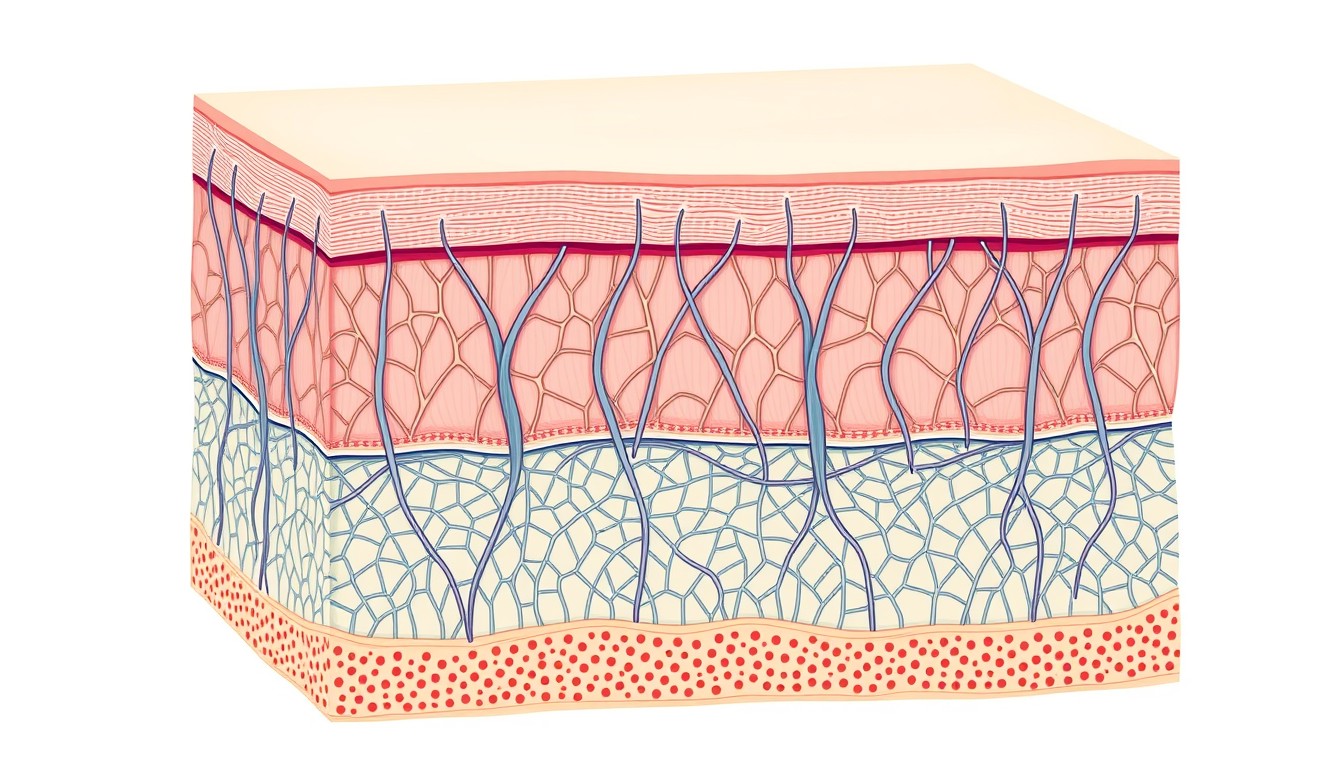
Sagging skin does not show up overnight. It is the jawline that softens, the eyelids that sit a little lower, the skin on the neck and upper arms that no longer snaps back. If you are researching collagen for sagging skin, here is the short answer: collagen loss is a big part of why skin sags - but it is not the only part, and knowing the difference tells you what you can realistically change.
Your face is built in layers, and every one of them changes with age.
The dermis thins. The dermis is the skin's support layer, and it is mostly collagen. After your mid-twenties, collagen production drops by about 1% a year, and women lose roughly 30% of skin collagen in the first five years after menopause. Less collagen means thinner, weaker skin.
Elastin wears out. Elastin is the fiber that lets skin recoil after it stretches. Your body makes very little new elastin after adolescence, and sun exposure degrades what is left.
Fat pads shrink and shift. The cheeks and temples are padded by distinct pockets of fat. With age they lose volume and slide downward, which is a large part of why the jowls and folds beside the mouth deepen.
Bone recedes. The facial skeleton slowly resorbs, especially around the eye sockets and jaw. The frame the skin hangs on gets smaller.
Gravity does the rest. A thinner, less elastic skin draped over less padding and less bone is going to hang lower.
Of those four layers, the dermis is the one collagen speaks to directly. Collagen is the scaffolding that gives skin its firmness and thickness. When that scaffold thins, skin loses the structure that holds it in place.
Hydrolyzed collagen breaks down into small peptides and amino acids - glycine, proline and hydroxyproline - that your body absorbs. Some of those peptides appear to signal the fibroblasts in your dermis, the cells that build new collagen and elastin.
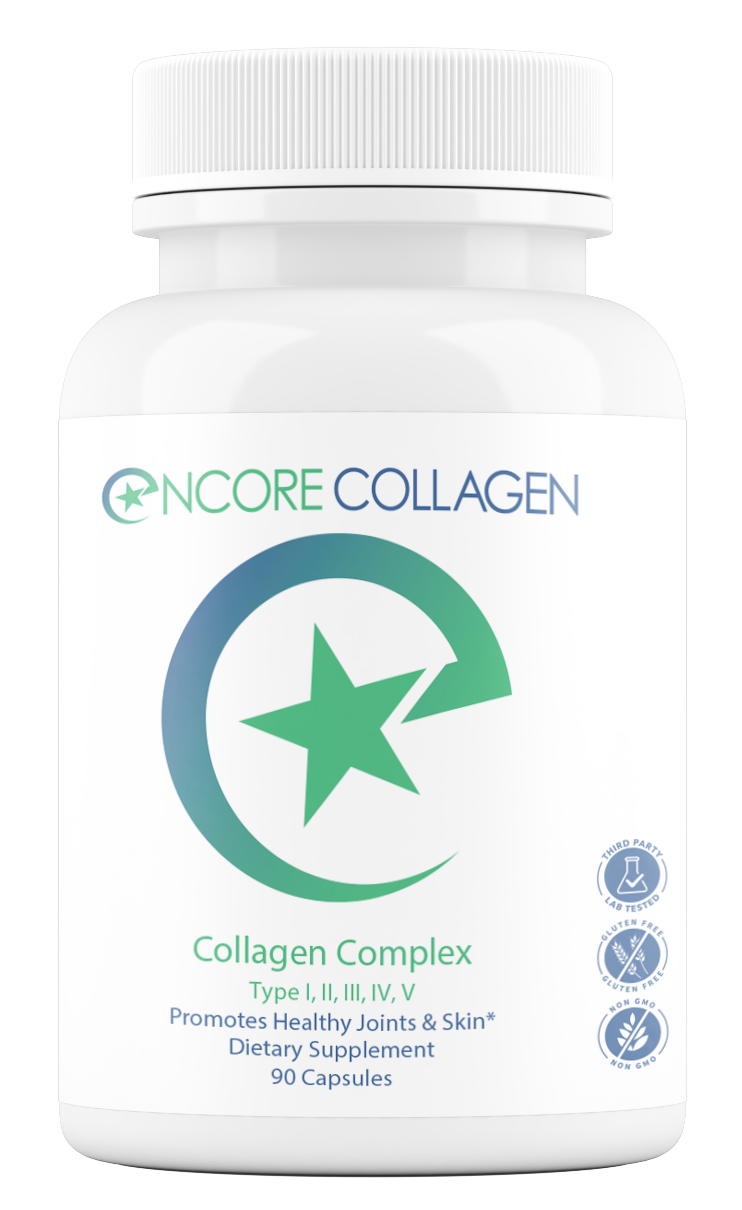
Encore Collagen Complex delivers 1,800 mg of hydrolyzed collagen from five sources, with hyaluronic acid - the building blocks your dermis draws on to maintain firmness.
See the FormulaSeveral randomized, placebo-controlled trials have tested oral collagen peptides on skin. Over 8 to 12 weeks, the most common findings are improved skin elasticity, better hydration and higher collagen density in the dermis on ultrasound. A 2021 meta-analysis of 19 studies covering more than 1,100 people reached the same general conclusion.
Be clear about what that means. Firmer, thicker skin is a real and measurable change. It is not a facelift. No supplement rebuilds lost fat pads or bone, and no supplement will tighten heavily stretched skin after a major change in body shape.
Daily sunscreen. UV light breaks down both collagen and elastin. It is the single biggest outside cause of skin aging, and the most preventable. More on that in our piece on sun damage and collagen.
A topical retinoid. Retinoids are among the best-studied ingredients for building dermal collagen from the outside.
Enough protein and vitamin C. Your body cannot make collagen without vitamin C, and it needs protein to supply the amino acids.
No smoking. Smoking speeds up collagen breakdown and slows repair.
Steady weight. Large, repeated weight swings stretch skin past what it can recover from. If that is your situation, read our guide to loose skin after weight loss.
Encore Collagen Complex combines bovine hide, chicken sternum, wild-caught cod, eggshell membrane and avian sternum cartilage to cover Types I through V - including Types I and III, the main collagens in the dermis.
The bottom line: sagging is a four-layer problem. Collagen addresses the most important layer you can influence from the inside - the dermis. Pair it with sun protection and a retinoid, give it at least 12 weeks, and judge the result in good light.
Collagen supports the dermis, the layer of skin that gives it firmness and thickness. Randomized trials of hydrolyzed collagen peptides have reported improved skin elasticity, hydration and dermal collagen density after 8 to 12 weeks. Collagen does not replace the lost fat and bone that also contribute to sagging, so expect firmer skin, not a lift.
Sagging comes from four layers changing at once: the dermis thins as collagen production falls, elastin fibers wear out and are barely replaced, facial fat pads shrink and slide down, and facial bone slowly recedes. Sun exposure, smoking and large weight swings speed the process up.
Most clinical trials of collagen peptides for skin run 8 to 12 weeks, and that is when measurable changes in elasticity and hydration are typically reported. Take it daily and give it at least three months before judging the result.
1,800mg of five-source collagen per serving. Third party tested. GMP certified. 90-day money-back guarantee.
Order the Collagen Complex →