Joint Health
Collagen and Arthritis: What the Research Actually Shows
If your knees ache on the stairs or your fingers are stiff every morning, you have probably seen collagen pitched as the answer. Here is the honest version of collagen for arthritis: it is not a treatment, but there is real research on collagen and joint symptoms - and knowing what it found helps you decide whether it belongs in your routine.
"Arthritis" covers more than 100 conditions, but two account for most of them, and they work in completely different ways.
Osteoarthritis is wear and repair falling out of balance. The smooth cartilage that caps the ends of your bones thins and roughens over years, and the joint loses its cushion. It is the most common form by far, and it is the one almost all collagen research has studied.
Rheumatoid arthritis is autoimmune. The immune system attacks the lining of the joint. It needs a doctor and prescription care, and no supplement changes that. Everything below is about osteoarthritis.
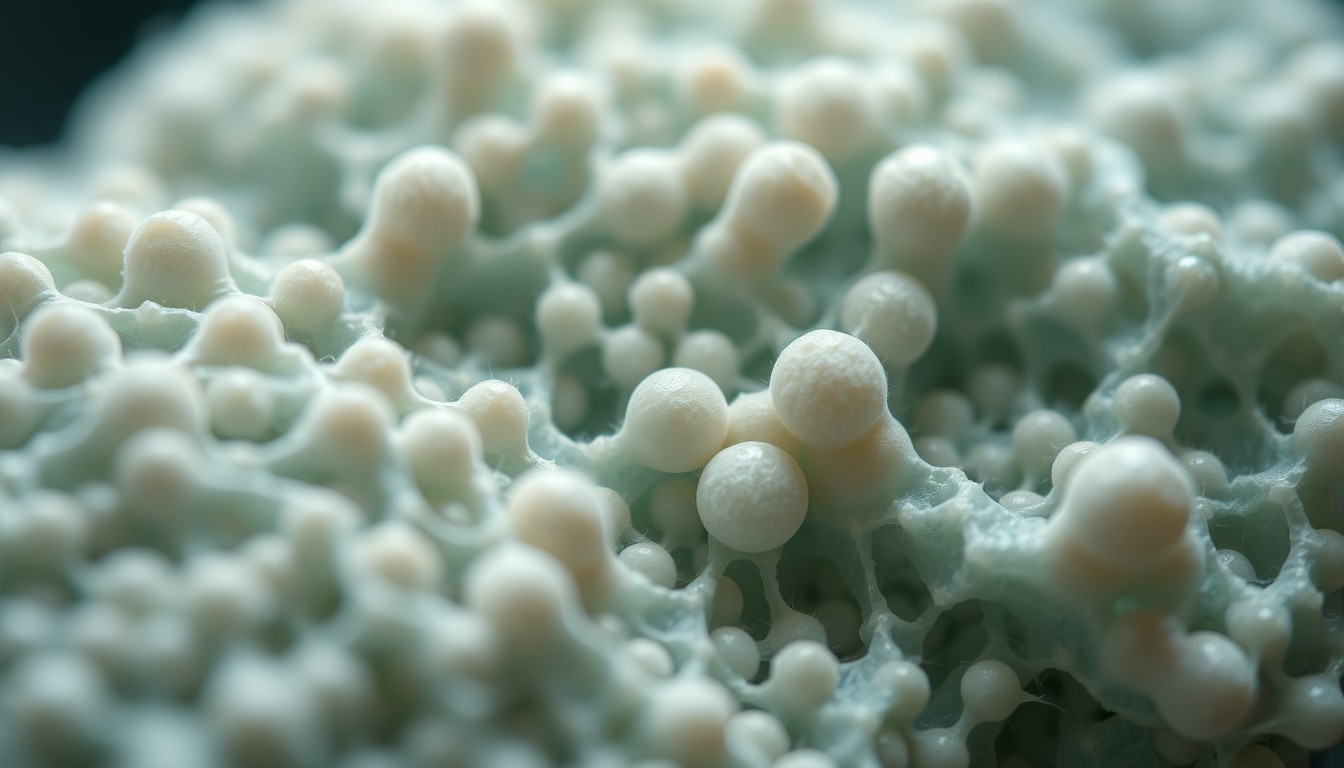
Articular cartilage is built on a mesh of Type II collagen. That mesh holds water-loving molecules in place, which is what lets cartilage absorb load and spring back. In osteoarthritis, enzymes break down that collagen mesh faster than the cells inside cartilage can rebuild it.
Those cells, called chondrocytes, are few and slow. Cartilage has no blood supply of its own, so repair is gradual at the best of times - and it gets slower with age, as collagen production declines across the body.
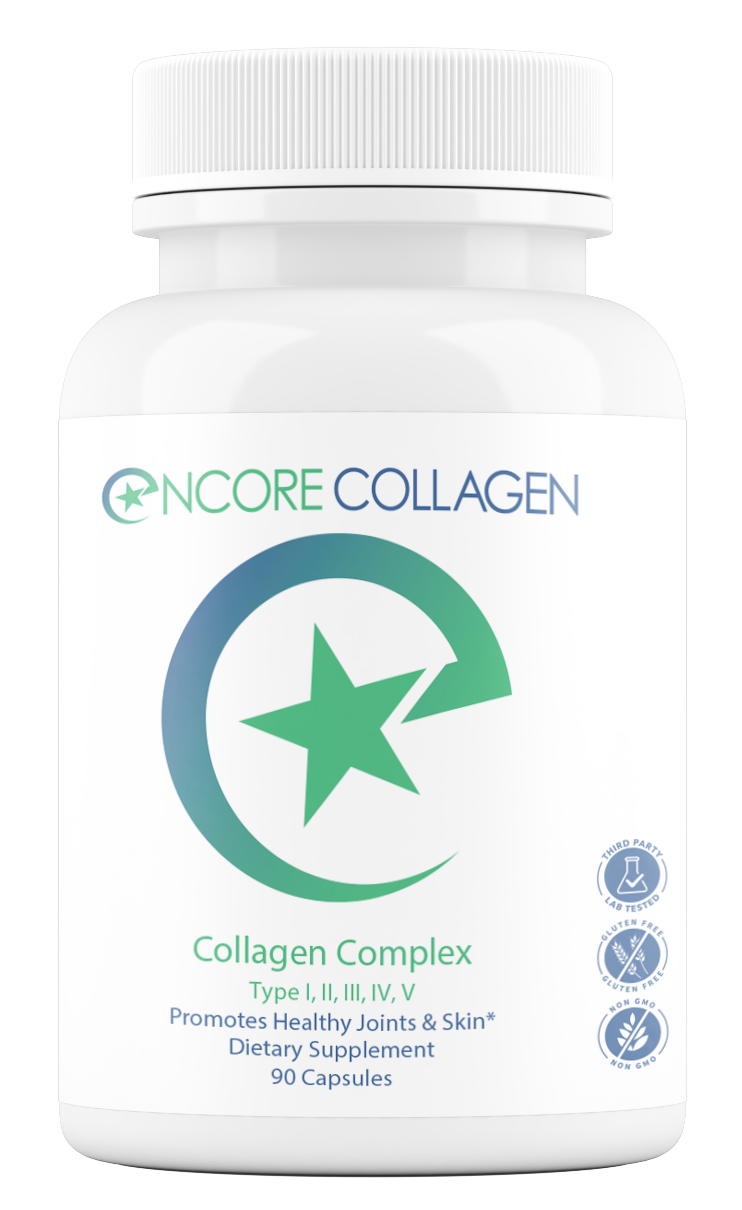
Encore Collagen Complex delivers 1,800 mg of hydrolyzed collagen from five sources - including Type II from chicken and avian sternum cartilage - plus glucosamine, chondroitin and hyaluronic acid to support healthy cartilage.
See the FormulaHydrolyzed collagen breaks down into small peptides that are absorbed into the blood. A classic 1999 study in mice found that labeled collagen peptides built up in cartilage after being swallowed - evidence they reach the tissue, not proof of what they do there.
In people, the best summary is a 2019 meta-analysis of five placebo-controlled trials covering about 500 people with osteoarthritis. Collagen groups reported modest improvements in pain and overall symptom scores compared with placebo. Separate trials in athletes without arthritis have reported less activity-related joint discomfort over about six months.
Be clear about the limits. The trials were small and short, the effects were modest, and none of them showed cartilage growing back on imaging. Some well-known studies use undenatured Type II collagen, which works through a different mechanism than the hydrolyzed collagen most supplements contain - so read labels and study details carefully.
Movement. Exercise is the most consistently recommended approach for osteoarthritis. Cartilage gets its nutrients from joint fluid, and loading and unloading the joint is what pumps that fluid through it.
Strength. Stronger thigh muscles take load off the knee. Strength training two or three times a week is one of the best investments a sore knee can get. More in our guide to collagen and knee pain.
Weight. In one well-known trial, every pound of weight lost took about four pounds of load off the knee with each step.
Your doctor. New joint swelling, redness, or stiffness that lasts more than an hour in the morning deserves a proper diagnosis before you try anything on your own.
Encore Collagen Complex combines bovine hide, chicken sternum, wild-caught cod, eggshell membrane and avian sternum cartilage to cover Types I through V, with glucosamine and chondroitin in the same three-capsule serving.
The bottom line: collagen will not reverse arthritis, and anyone who says otherwise is selling something. What it can do is supply the building blocks your cartilage runs on, with modest but real support for joint comfort in the trials. Pair it with movement and strength work, take it daily, and give it at least three months.
Collagen is not a treatment for arthritis. In osteoarthritis, small placebo-controlled trials of collagen supplements have reported modest improvements in joint pain and symptom scores, and a 2019 meta-analysis of five trials reached the same conclusion. No trial has shown collagen rebuilding lost cartilage. Rheumatoid arthritis is autoimmune and needs medical care.
Type II collagen is the main collagen in cartilage, so it is the type most associated with joints. Types I and III support the tendons, ligaments and bone around the joint. Hydrolyzed collagen and undenatured Type II are studied differently, so check which form a product contains.
Most collagen trials on joint comfort run three to six months, and changes are usually reported toward the end of that window. Take it daily and give it at least three months before judging the result.
1,800mg of five-source collagen per serving. Third party tested. GMP certified. 90-day money-back guarantee.
Order the Collagen Complex →