Joint Health
Stiff Hands in the Morning? Here's What Collagen Has to Do With It
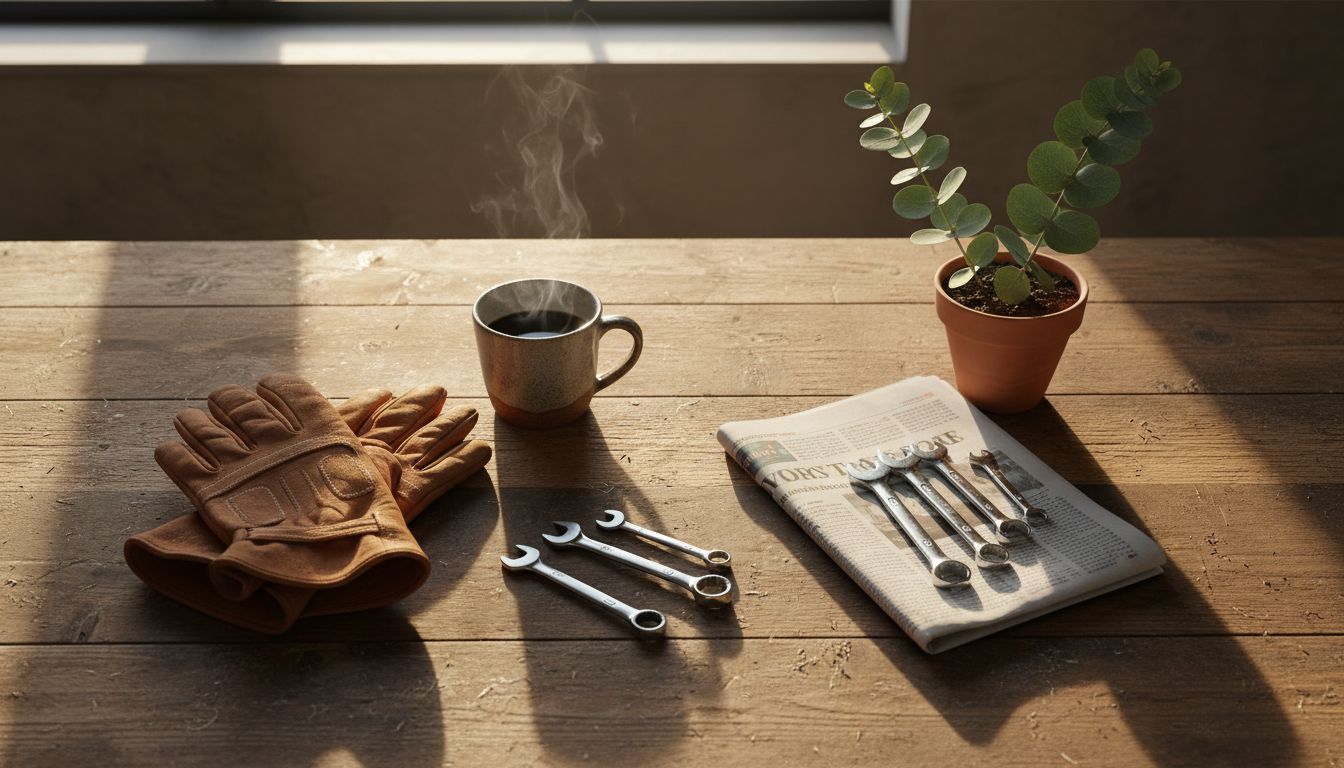
You wake up, reach for the coffee mug, and your fingers won't close all the way. Not painful exactly — just slow. Wooden. Like the joints need to warm up before they'll agree to bend.
If that sounds familiar and you're over 40, you're feeling the small joints of your hands doing what every joint in your body eventually does. They're losing collagen. And unlike a bad knee or a cranky shoulder, your hands tell on you first because you use them the second you're conscious.
Two things happen while you sleep. The synovial fluid inside your finger joints — the thin lubricant that keeps cartilage sliding smoothly — cools and thickens. And the cartilage itself, which is roughly 70% water bound to a collagen scaffold, temporarily loses some of that hydration because you're not moving.
In a 25-year-old, the collagen matrix inside that cartilage is dense and springy. It rehydrates in seconds. You get out of bed, flex your hands twice, and everything moves.
By 50, that same matrix has lost about a third of its collagen density. The fluid thickens the same way it always did — but now there's less of a scaffold to spring back. So the stiffness lasts 5, 10, sometimes 20 minutes before your hands feel like your hands again.
People assume knees and hips wear out first because they carry the weight. But the finger joints have their own problem: they're small, they move constantly, and the cartilage layer inside them is thin to begin with.
When you lose 1.5% of your collagen per year after 25 — the standard rate — a thin layer notices sooner than a thick one. A knee has millimeters of cartilage to work with. A finger joint has fractions of a millimeter. The math catches up to hands earlier than most people expect.
This is also why manual workers, guitarists, and anyone who has typed for a living tend to feel it first. Repetitive motion doesn't cause the collagen loss — the loss is chronological — but it does expose the loss sooner.
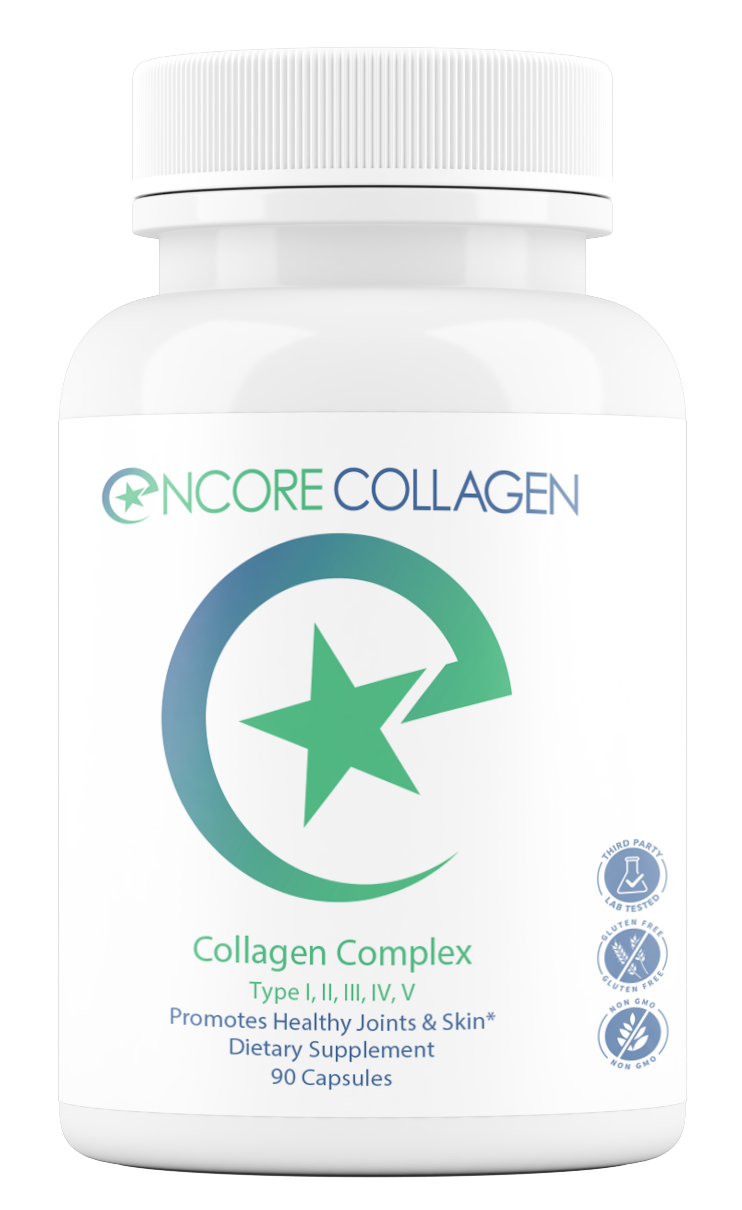
Encore Collagen Complex delivers 1,800mg of Types I, II, III, IV, and V collagen per serving — the same five types your fingers, knees, and shoulders are all losing.
See the Complex →Three types matter here. Type II collagen is the primary structural protein in cartilage — the shock absorber sitting between the bones of every knuckle. Type I is the workhorse of tendons, which is what lets your fingers bend against resistance. Type III supports the connective tissue around the joint capsule that holds everything together.
When people take a single-source collagen — just marine (mostly Type I) or just bovine — they're feeding the tendons or the skin but missing the cartilage. That's why Type II collagen matters specifically for joints, and why a multi-type formula is what actually reaches the parts of a stiff hand that are asking for help.
Three things move the needle on morning hand stiffness, and one thing doesn't.
What helps: Movement in the first 60 seconds. Warm water. And feeding the joints — 10g of hydrolyzed collagen daily, with vitamin C to activate synthesis. Studies on hydrolyzed collagen at that dose show measurable joint comfort improvements in 8 to 12 weeks. That's not fast, but it's the timeline collagen works on because that's how long it takes your body to rebuild connective tissue.
What doesn't: Ignoring it. The collagen decline doesn't reverse on its own. If you're 45 and the stiffness lasts 10 minutes, at 55 it lasts longer — unless you give the raw material back. This is the same pattern that plays out in the gradual collagen loss men experience across the whole body, and hands are usually the first place it shows.
Your hands have opened doors, gripped steering wheels, and typed emails for four or five decades by the time they start telling you about it. The stiffness is a message, not a verdict. Collagen density can be rebuilt at almost any age — it just takes consistency and the right raw materials.
The people who take this seriously in their 40s tend to have hands that still work like hands in their 70s. The people who wait usually don't.
Encore Collagen Complex — 1,800mg of five collagen types from bovine, chicken, marine cod, eggshell membrane, and avian sternum. Built for the joints that actually move, including the smallest ones. Third-party tested. 90-day guarantee.
Overnight, synovial fluid in the small finger joints thickens and cartilage temporarily dehydrates. When collagen levels are already low, the connective tissue has less elasticity to spring back — so the stiffness lasts longer. Most people over 45 feel it for 5–20 minutes before the joints loosen up.
Yes, in combination with movement. Type II collagen supports cartilage in the finger joints, and Types I and III support the tendons and skin around them. Studies on hydrolyzed collagen (10g/day) show measurable joint comfort improvements in 8–12 weeks.
Not always. Brief stiffness that clears within 30 minutes is usually age-related connective tissue change. Stiffness lasting over an hour, with swelling or heat, warrants a doctor's visit to rule out inflammatory arthritis.
1,800mg of five-source collagen per serving. Third party tested. GMP certified. 90-day money-back guarantee.
Order the Collagen Complex →