Collagen Types
Type IV Collagen: The Hidden Layer That Repairs Your Skin
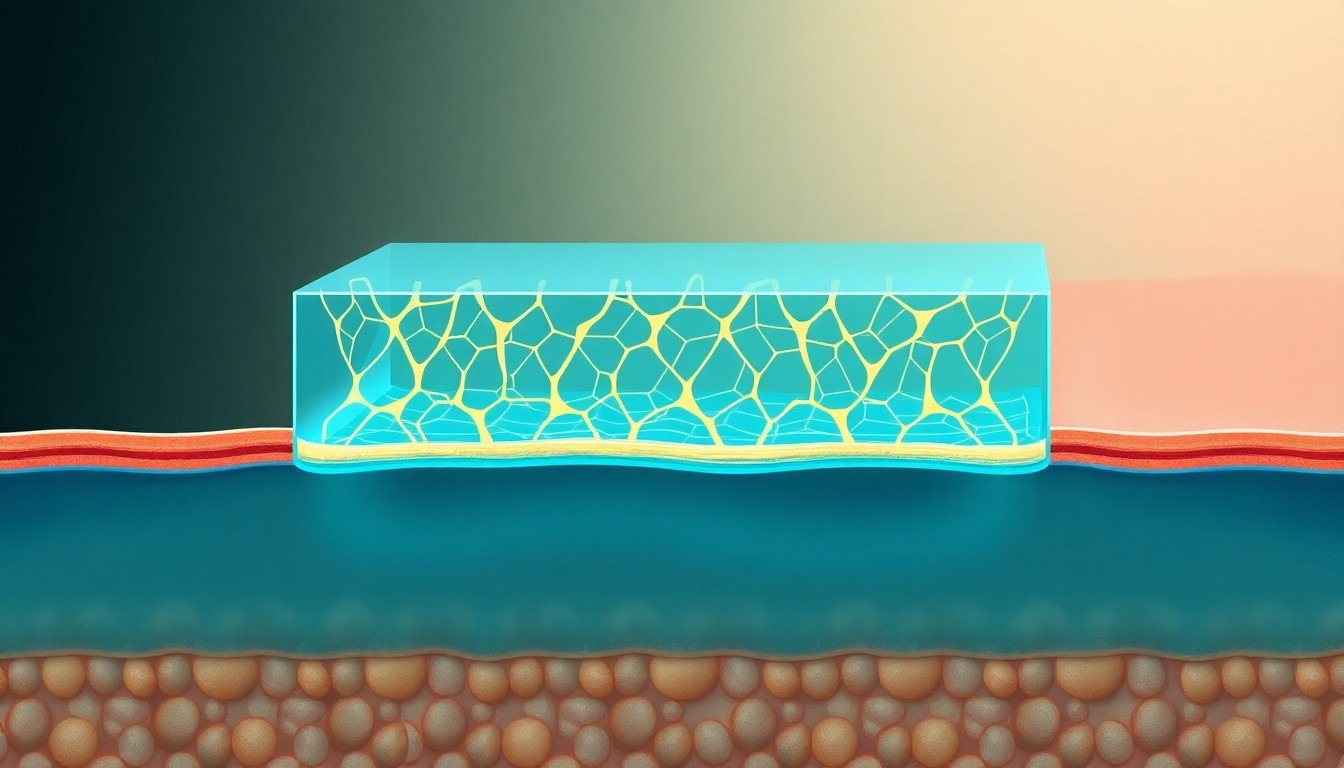
Type I gets the press. Type II runs your joints. But there is a third type of collagen working under both of them that almost no supplement company talks about — and when it breaks down, your skin loses its ability to heal itself.
It is called Type IV collagen, and it lives in a paper-thin layer called the basement membrane — the seam that holds your epidermis to the dermis underneath.
If your skin is bruising easier, taking longer to heal, or looking thinner than it used to, this is almost certainly part of the story.
Most collagen in your body forms long, rope-like fibrils. Type I builds the scaffolding of skin and bone. Type III adds elasticity. Type II cushions your joints. They all look like fibers under a microscope.
Type IV is different. It forms a mesh.
That mesh sits in the basement membrane — a 100-nanometer-thick sheet that separates every layer of your skin from the connective tissue beneath it. The mesh acts like a filter, a scaffold, and an anchor all at once. Cells use it to know where to grow. Nutrients use it as a gate. New skin cells use it as the foundation they crawl across when a wound is healing.
No basement membrane, no skin repair. It is that direct.
By the time you are 50, your Type IV collagen production has dropped by roughly 30 to 40 percent compared to your 20s. UV exposure speeds this up. Smoking accelerates it. Menopause crashes it.
Here is what that looks like in the mirror: thinner skin on the back of your hands, bruises that stick around for two weeks instead of three days, paper cuts that turn into raised marks, and that crepey texture no moisturizer seems to fix.
The dermis on top still has structural collagen (Type I and III). But without a healthy Type IV scaffold underneath, those upper layers lose their attachment point. The skin gets thinner and more fragile because the layer holding everything together is fraying.
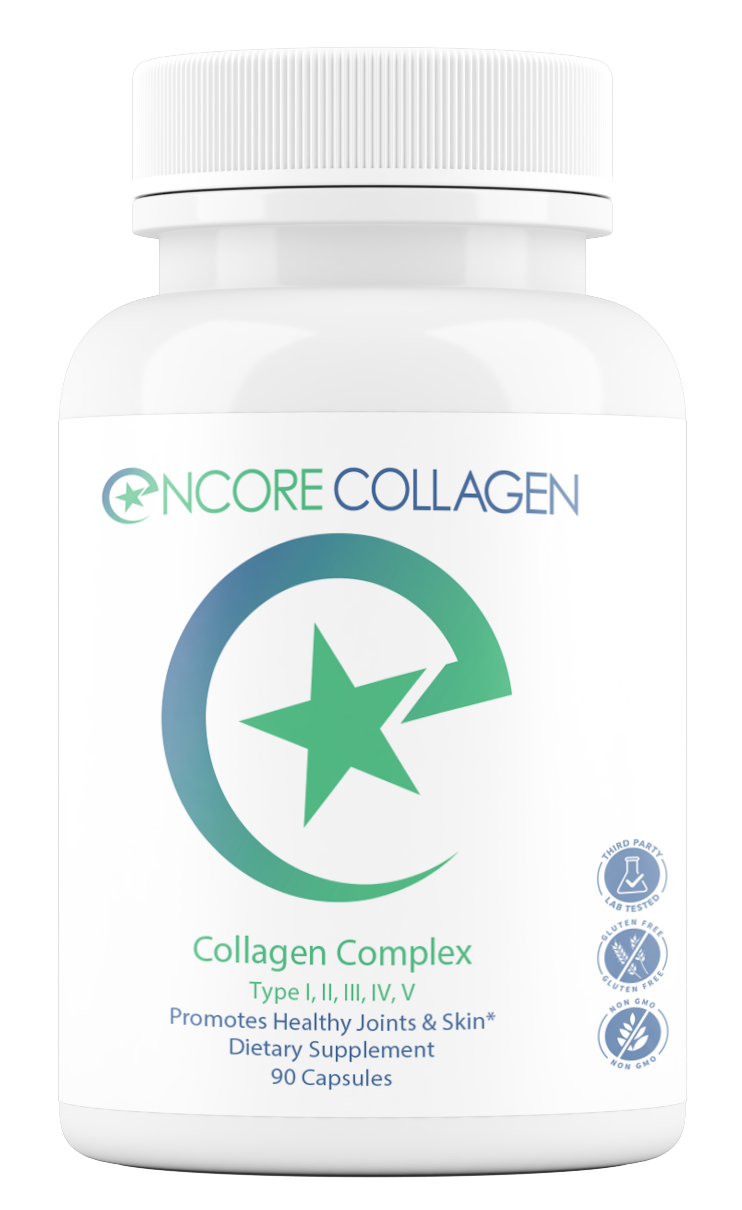
Encore Collagen Complex delivers all five types — including Type IV — from five distinct sources in a single 1,800mg serving. It is the only multi-type formula built around what your skin actually rebuilds with.
Order Encore Collagen Complex →Beyond holding skin together, the Type IV mesh acts as a selective filter. It controls what passes from the dermis up into the epidermis — nutrients, growth factors, immune cells. When the mesh is intact, the flow is regulated. When it gets damaged, the wrong molecules slip through and the right ones do not make it where they are going.
That is part of why aged skin looks dull. The nutrient highway underneath it has potholes.
Research published in the Journal of Investigative Dermatology showed that basement membrane damage is one of the earliest visible changes in photo-aged skin — often appearing before fine lines do. The breakdown of Type IV is happening before you can see the wrinkles it eventually causes.
If you pick up a bottle of collagen at the store and read the label, you will almost always see Type I and Type III listed. Sometimes Type II. Almost never Type IV or Type V.
The reason is simple. Type I and III are easy to extract from bovine hide and fish skin — cheap raw materials, big yields. Type IV is found in much smaller quantities and requires specific sources like avian sternum and eggshell membrane to deliver in a supplement.
Most companies do not bother. The customer does not know to ask for it. And by the time the skin shows the damage from Type IV depletion, the bottle is long gone.
A complete collagen formula should pull from multiple sources, not just one. Bovine alone gives you Type I and III. Marine alone gives you Type I. Chicken cartilage adds Type II. Eggshell membrane and avian sternum are where you start picking up Type IV and Type V.
If a label only lists one source, you are missing half the rebuild materials your body needs.
Encore Collagen Complex was formulated specifically to cover all five types from five distinct sources — bovine, chicken, marine cod, eggshell membrane, and avian sternum. That is why the basement membrane gets supported alongside the structural fibers above it.
Type IV collagen is the layer your skin uses to repair itself. When it depletes, healing slows, bruises linger, and the skin loses its anchor.
If your collagen supplement does not include it, you are rebuilding the house without the foundation.
Most supplement labels do not list Type IV at all. When you do see it, the source is usually avian sternum or eggshell membrane — ingredients that contain Type IV alongside Type I, II, and V. Bovine and marine collagen, the two most common sources, contain almost no Type IV.
Basement membrane turnover is slow — expect 8 to 12 weeks before you notice skin healing faster or feeling thicker. Hair and nail changes often show up sooner, but the basement membrane is a slower rebuild because the mesh has to be regenerated cell by cell.
Bone broth has small amounts, mostly Type I and II. Eggshell membrane and chicken sternum cartilage are the richest dietary sources, but they are not foods most people eat. That is why a multi-source collagen supplement is usually the most realistic way to get Type IV.
1,800mg of five-source collagen per serving. Third party tested. GMP certified. 90-day money-back guarantee.
Order the Collagen Complex →