Joint Health
Collagen vs. Glucosamine: Which One Do You Actually Need?

The question of glucosamine vs collagen comes up constantly — and the honest answer is that they do different jobs in the joint. If you have ever stood in a supplement aisle staring at bottles of collagen and glucosamine, you are not alone. Both promise joint support. Both have loyal followings. But they work in fundamentally different ways — and understanding the difference changes everything about how you approach joint health. The question many people ask is type 2 collagen vs glucosamine chondroitin: which actually rebuilds cartilage, and which just lubricates the joint?
Glucosamine is an amino sugar. Your body produces it naturally, and it plays a role in building the cartilage matrix and maintaining the synovial fluid that lubricates your joints.
Most glucosamine supplements come from shellfish shells. The idea is straightforward: give your body more of this building block, and it can maintain cartilage better. It has been the go-to joint supplement for decades.
Here is the problem. Large-scale studies have produced mixed results. Some people report real improvement. Others take it for months and feel nothing. The research is inconsistent enough that many doctors now question whether glucosamine provides meaningful benefit beyond placebo.
Collagen is not a lubricant — it is the structural protein your cartilage is made of. Type II collagen makes up 50–60% of cartilage protein by dry weight. When your body loses collagen (about 1.5% per year after 30), the cartilage itself starts thinning.
Glucosamine tries to maintain the fluid around the joint. Collagen rebuilds what the joint is actually made of.
That is a critical distinction. One targets the environment. The other targets the structure.
A clinical trial compared 40mg per day of UC-II (undenatured Type II collagen) against 1,500mg glucosamine plus 1,200mg chondroitin — the standard joint stack most people take.
After 90 days, the UC-II group showed significantly greater improvement in joint pain, stiffness, and physical function. At a fraction of the dose.
UC-II works through a mechanism called oral tolerance. Instead of just providing building blocks, it trains your immune system to stop attacking your own cartilage. That is a fundamentally different approach — and for many people, a more effective one.
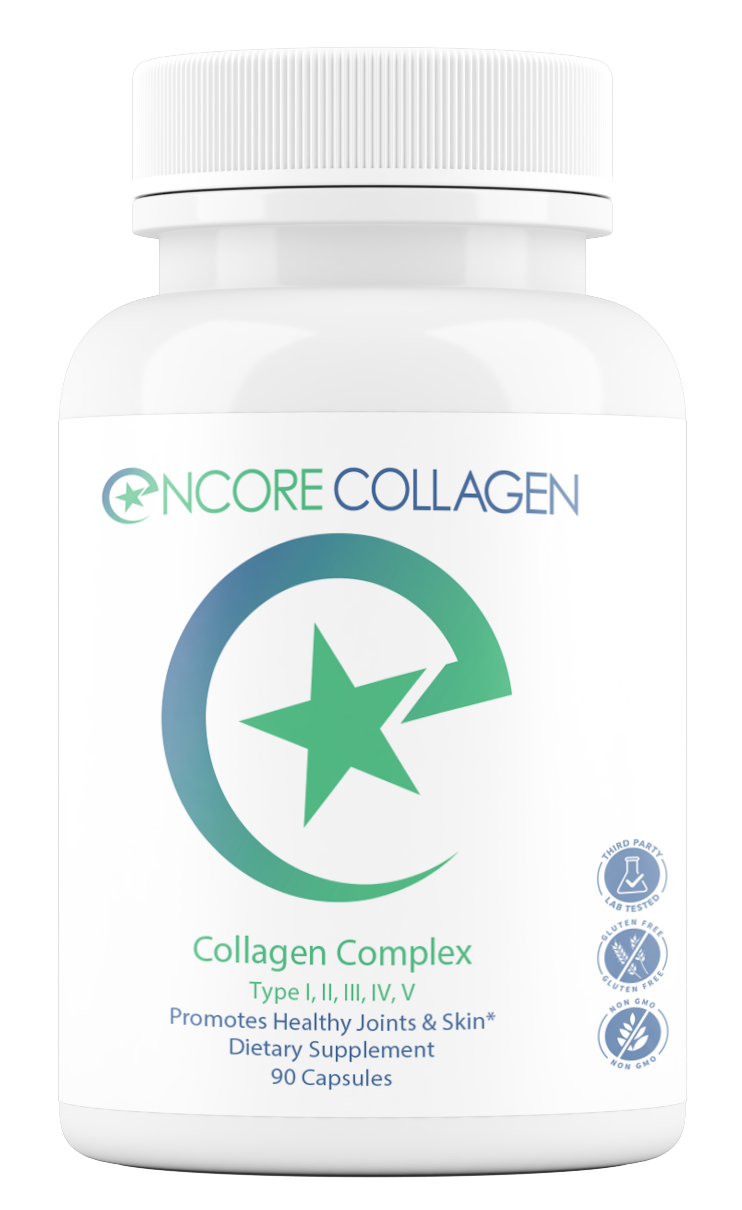
Encore Collagen Complex delivers all five collagen types — including Type II from chicken sternum cartilage — in a single 1,800mg daily serving.
Try It Risk-Free →If your joints are stiff, achy, or losing range of motion, the structural problem is almost certainly collagen loss — not a glucosamine deficiency. Your cartilage is literally made of collagen. When it depletes, no amount of joint fluid support can compensate.
Glucosamine is not harmful. But it addresses a secondary factor while ignoring the primary one.
The smarter move: start with a multi-type collagen that includes Type II. If your joints respond (most people notice changes within 8–12 weeks), you probably do not need glucosamine at all.
Most collagen supplements only contain Types I and III from bovine or marine sources. Those support skin, hair, and connective tissue — but they do not contain the Type II collagen your cartilage runs on.
A complete collagen complex includes Types I through V from multiple sources: bovine, marine, chicken sternum, eggshell membrane, and avian sternum. Each source delivers different collagen types that support different tissues.
Encore Collagen Complex includes all five collagen types from five distinct sources — so you are not choosing between joint support and skin support. You are getting both.
The collagen vs. glucosamine debate is not really a debate anymore. The research is pointing in one direction. Your cartilage is made of collagen. Support it directly.
Keep Reading
Yes. They work through different mechanisms — collagen provides structural protein for cartilage, while glucosamine supports the synovial fluid that lubricates joints. Taking both is safe, though many people find that a multi-type collagen supplement addresses their needs without needing glucosamine separately.
Research increasingly favors collagen, specifically Type II collagen. A clinical study found that 40mg of UC-II (undenatured Type II collagen) outperformed 1,500mg glucosamine plus 1,200mg chondroitin after 90 days in reducing knee pain and improving mobility.
Glucosamine typically requires 8–12 weeks of consistent use before noticeable results. Collagen supplements show measurable joint improvements in as little as 8 weeks, with skin and hair benefits sometimes appearing within 4–6 weeks.
1,800mg of five-source collagen per serving. Third party tested. GMP certified. 90-day money-back guarantee.
Order the Collagen Complex →