The Science
How Your Body Produces Collagen and Why It Slows Down
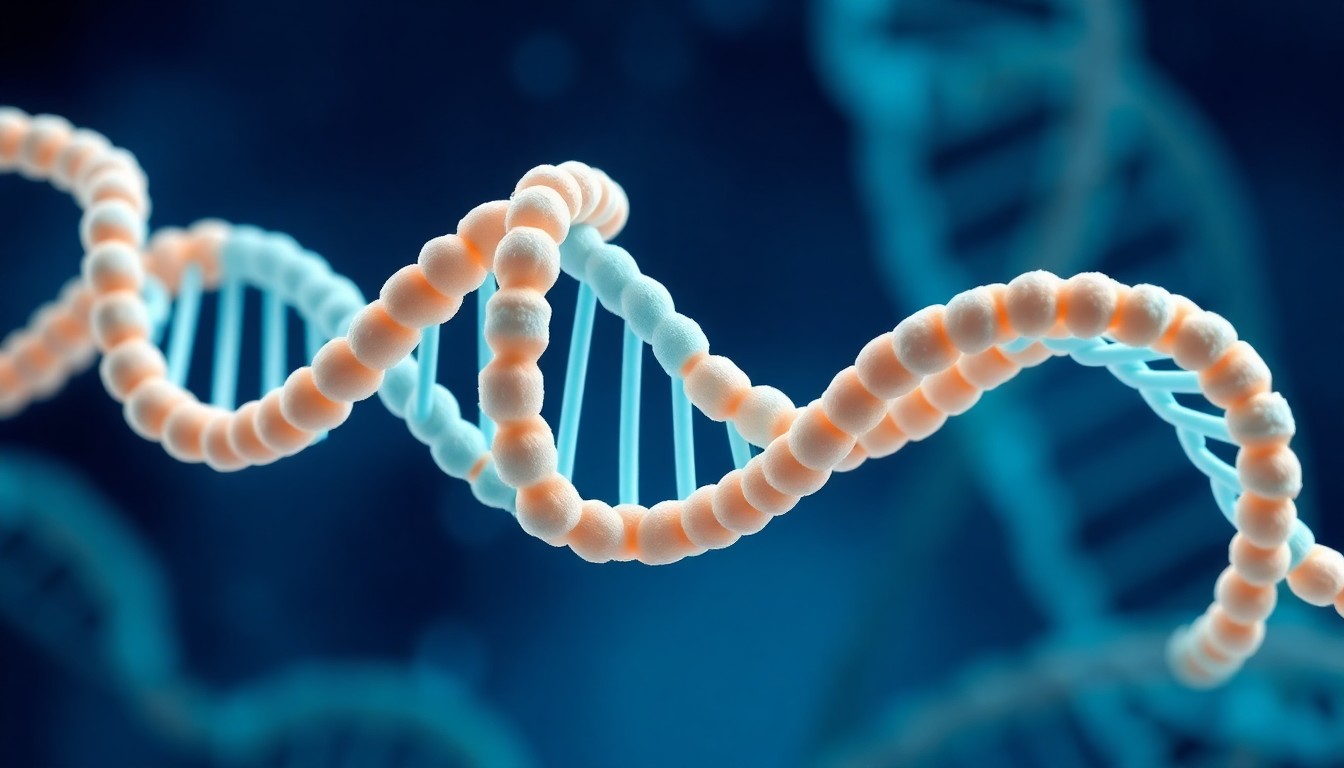
Your body makes collagen every day. Right now, as you read this, there are cells in your skin, your joints, and your bones assembling long protein chains, twisting them into helixes, and weaving them into the structural fabric that holds you together.
This is collagen production. It is one of the most important biological processes your body runs, and almost nobody understands how it actually works or why it starts slowing down in your 30s.
Here is what happens, step by step, and why the process changes with age.
Collagen is a protein. Proteins are built from amino acids. To make collagen, your body needs three specific amino acids in high supply: glycine, proline, and hydroxyproline. It also needs vitamin C, zinc, copper, and manganese as cofactors.
Glycine is the smallest amino acid and the most abundant in collagen. Every third position in a collagen chain is a glycine. Your body can make some glycine on its own, but not enough to keep up with demand when collagen production is at full capacity.
If any of these raw materials run short, production slows. This is not a theory. It is the biochemistry of how the enzyme responsible for collagen synthesis actually works.
Fibroblasts are the specialized cells that build collagen. They live in the dermis of your skin, in cartilage, in tendons, and in the connective tissue around every organ.
Each fibroblast reads your DNA for the collagen blueprint, assembles amino acids into long chains called procollagen, and ships those chains outside the cell. Three procollagen chains twist together into a triple helix. Many triple helices align and cross-link to form collagen fibers.
A healthy fibroblast produces collagen continuously. In young skin, this happens fast enough that the dermis is constantly renewing itself.
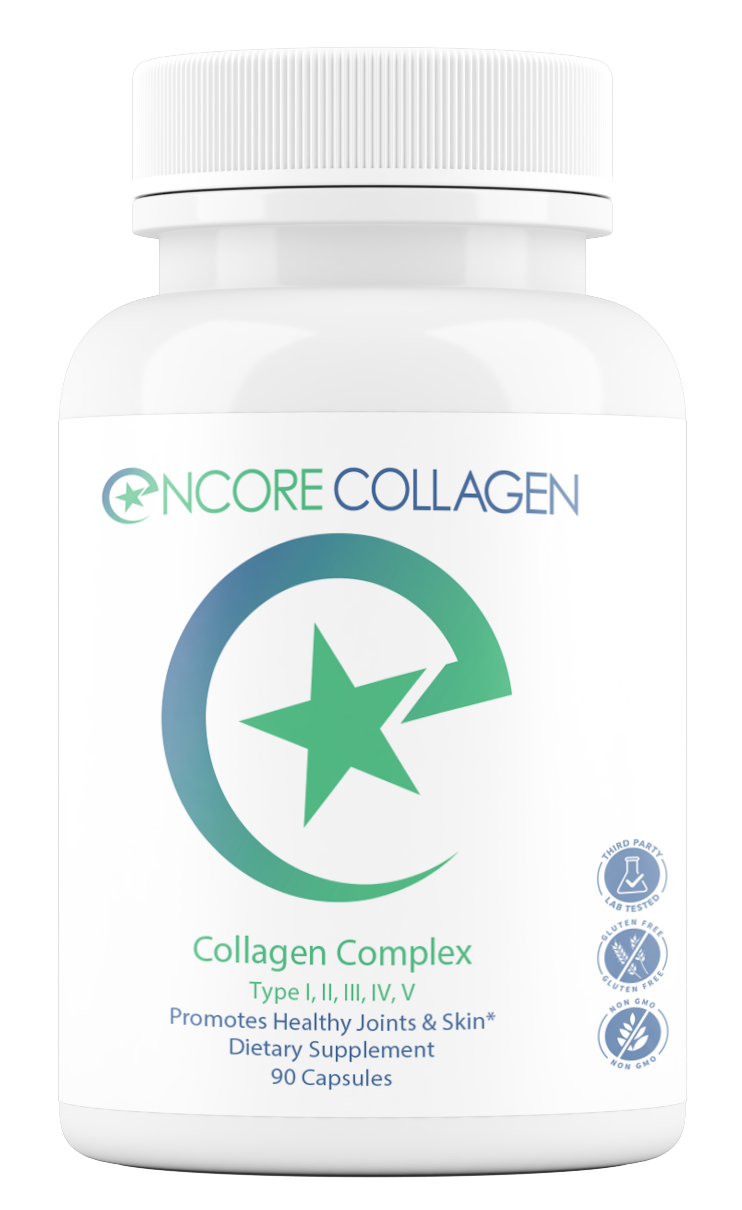
Encore Collagen Complex delivers the amino acids your fibroblasts need to keep producing collagen, plus five collagen types from five natural sources.
Try It Risk-Free →Around age 30, three things happen to your fibroblasts simultaneously.
First, their efficiency drops. An aging fibroblast produces less collagen per day than a young one, even with identical amino acid supply. The cellular machinery slows.
Second, hormone signals weaken. Estrogen in women and testosterone in men both stimulate collagen synthesis. When these hormones decline, the signal to produce collagen gets quieter.
Third, enzyme activity that breaks down collagen (called matrix metalloproteinases) increases with age, sun exposure, and inflammation. So you produce less and tear down more at the same time.
The net result is a collagen deficit of roughly 1.5% per year starting in your 30s. By 50, you have lost about 30% of what you had in your 20s.
Three inputs have the strongest evidence for supporting collagen production:
Hydrolyzed collagen peptides. When you consume collagen peptides, they break down into amino acids and small di-peptides in your gut. Research shows these specific peptides (particularly prolyl-hydroxyproline) circulate in your bloodstream and accumulate in skin and cartilage, where they signal fibroblasts to produce more collagen.
Vitamin C. Your body cannot convert proline to hydroxyproline without vitamin C. No vitamin C, no functional collagen. This is why sailors with scurvy developed collapsing connective tissue.
Minimizing damage inputs. UV radiation, smoking, and high-sugar diets all accelerate collagen breakdown. Production cannot keep up if destruction runs hot.
Encore Collagen Complex provides 1,800mg of Types I-V hydrolyzed collagen peptides daily. The amino acid profile matches what fibroblasts actually use when assembling collagen. Learn more →
Collagen production is a process, not a switch. Your body is running it every day, and every day it is slightly less efficient than the day before.
You cannot reverse the decline. But you can slow it by feeding the process what it needs: amino acids, vitamin C, and fewer inputs that accelerate breakdown. Daily hydrolyzed collagen supplementation is the most direct way to supply the raw material.
The biology is simple. Production is a sum of inputs minus losses. Make more, lose less, and the scaffolding holds up longer.
Fibroblasts are the specialized cells that produce collagen. They live in the dermis of your skin, in cartilage, in tendons, and in connective tissue around every organ. Each fibroblast reads DNA for the collagen blueprint, assembles amino acids into procollagen chains, and ships those chains outside the cell where they twist into triple helixes.
Three amino acids are essential: glycine, proline, and hydroxyproline. Your body also needs vitamin C, zinc, copper, and manganese as cofactors. Vitamin C is especially critical because the enzyme that converts proline to hydroxyproline cannot function without it.
Yes. Hydrolyzed collagen peptides signal fibroblasts to produce more collagen. Vitamin C provides the cofactor for the enzyme that builds functional collagen. Reducing UV exposure, not smoking, and limiting high-sugar foods all slow the breakdown side of the equation.
1,800mg of Types I-V hydrolyzed collagen peptides. The exact raw material your fibroblasts use to build collagen.
Order the Collagen Complex →