Skin Health
Can Collagen Help With Acne Scars?
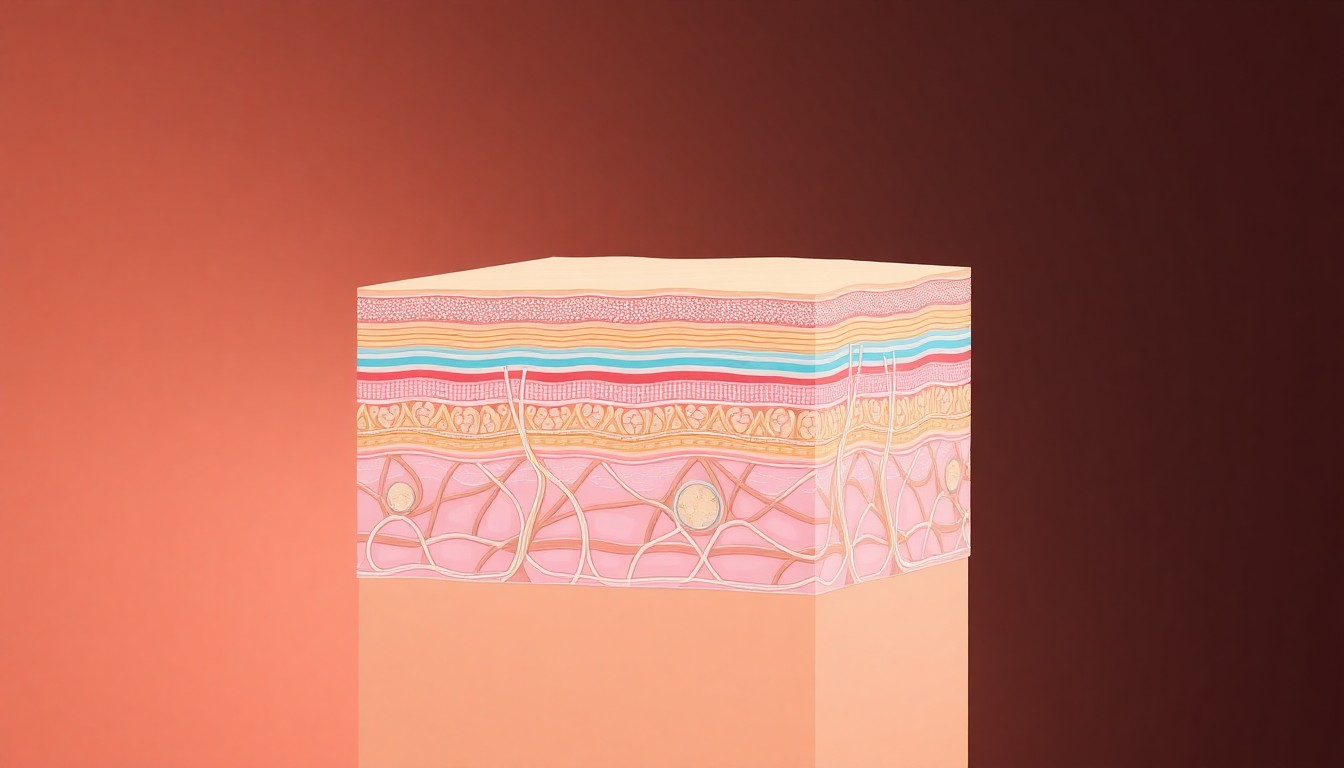
Acne scars are not a surface problem. The breakout that caused them was — but the scar itself sits deeper, in the dermis, where collagen builds the structural framework of your skin.
That is why creams, serums, and exfoliants only do so much. They work on the top layer. The damage is one floor down.
If you are researching collagen for acne scars, this is what you actually need to know — what is possible, what is not, and which types of collagen do the heavy lifting.
A pimple is an inflammatory event. Bacteria, oil, and immune cells gather around a clogged follicle, and the surrounding tissue takes collateral damage.
When that inflammation reaches the dermis, it disrupts the collagen and elastin scaffolding that gives skin its smooth, elastic structure. Severe acne — cystic, nodular, or recurring in the same spot — degrades that scaffolding faster than the body can rebuild it.
The result is one of two things: atrophic scars (icepick, boxcar, rolling) where collagen is missing, or hypertrophic scars where collagen is overproduced into a raised lump. Both come down to the same thing: collagen, in the wrong amount, in the wrong place.
Oral collagen does not fill in a scar from the outside. It does not work that way.
What it does is provide the amino acid building blocks — proline, glycine, hydroxyproline — that your fibroblasts use to manufacture new collagen in the dermis. Studies on hydrolyzed collagen peptides show measurable increases in dermal collagen density and skin elasticity after 8 to 12 weeks of supplementation. A 2019 review in The Journal of Drugs in Dermatology looked at 11 trials and found consistent improvements in skin firmness, hydration, and elasticity with daily collagen peptide intake.
For acne scarring, the value is supportive. You are giving the dermis the raw material it needs to rebuild the scaffolding that inflammation tore apart. It works alongside whatever clinical treatment you use — microneedling, laser, retinoids — not instead of it.
Encore Collagen Complex delivers 1,800mg of Types I, II, III, IV, and V — the full collagen profile your dermis uses to rebuild after inflammatory damage.
Order the Complex →Skin is not built from one type of collagen. It is built from at least three working together.
Type I is the bulk material — about 80% of dermal collagen. It gives skin its tensile strength and is the primary protein your fibroblasts produce when repairing damage. Type III shows up first in any healing event. It is the elasticity scaffold that holds tissue together during early repair before Type I takes over. Type IV sits at the basement membrane between the epidermis and dermis — the layer that keeps skin organized and anchored.
A single-source collagen — marine peptides only, or bovine only — gives you Types I and III but skips Type IV and the others. That is why a multi-type formula is the more complete approach for skin support. We covered the full breakdown in The 5 Types of Collagen: What Each One Does for Your Body.
This is the honest answer. Atrophic scars more than a year old have stable, organized fibrotic tissue. No oral supplement is going to dissolve that and rebuild it from scratch.
What collagen can do is improve the skin tissue around the scars — better hydration, better elasticity, denser dermis. The result is scars that look softer because the surrounding skin looks healthier. That is a meaningful cosmetic difference, especially when paired with a clinical treatment that physically remodels the scar tissue.
For new or actively-forming scars, the picture is better. Giving the dermis sustained collagen substrate during the healing window — the first 6 to 12 months after a breakout — supports the repair process while the tissue is still being laid down.
The protocol is simple. 1,500-2,000mg of hydrolyzed collagen peptides per day, taken consistently for at least 12 weeks. Pair it with vitamin C if you can — it is a required cofactor for collagen synthesis.
Skip the trendy single-source powders. For skin repair specifically, you want a complex that includes Types I, III, and IV at minimum. Type II is bonus territory — useful for joints, less directly relevant to dermal repair, but it is part of the full collagen system the body uses.
Hydration matters. So does protein intake — collagen synthesis competes with every other repair process in the body for amino acids. If you are undereating protein, no supplement will compensate.
Encore Collagen Complex is built around the multi-type approach. Five sources, five collagen types, 1,800mg per serving — the full structural protein library your dermis pulls from when it is rebuilding after inflammatory damage.
Collagen supplements are not a scar eraser. They are a substrate. They give the dermis the building blocks to rebuild what acne tore down — and they work best as part of a longer skin-care strategy, not a one-week experiment.
If you have been researching whether collagen helps skin in general, the answer for acne scarring is the same: it supports the structural rebuild. It is not magic, but it is not nothing either.
Visible changes in skin quality typically take 8 to 12 weeks of daily supplementation. The dermis rebuilds slowly. For acne-related skin support, plan on at least 3 months of consistent intake before judging results.
No. Established atrophic scars have organized fibrotic tissue that oral collagen cannot dissolve or rebuild. What collagen does is improve the surrounding skin (better hydration, density, and elasticity) which can make scars look softer. For physical scar remodeling, clinical treatments like microneedling or laser are required.
Type I and Type III are the most relevant for dermal repair, with Type IV supporting the basement membrane between skin layers. A multi-type collagen complex gives you all three rather than just one. Single-source marine or bovine collagen typically provides Types I and III but misses the others.
1,800mg of five-source collagen per serving. Third party tested. GMP certified. 90-day money-back guarantee.
Order the Collagen Complex →